

Based on 1 Review On Google


The incredible 18-day Nar Phu Valley Trek, combined with the Annapurna Circuit, offers renowned mountain passes, remote Himalayan scenery, and Tibetan-influenced culture. You will travel deep into the Nar and Phu valleys, two of Nepal's most remote and culturally diverse mountainous communities, before joining the Annapurna Circuit Trek. On this Trek arranged by Trip Pokhara, you will be blessed with a rare chance to witness the beautiful way of life of the Tibetan-influenced people of the Manang region. Explore historic monasteries, cross the 5,322-meter Kang La Pass and the 5,416-meter Thorong La Pass, and enjoy breathtaking views of some of the World’s Tallest peaks like Tilicho Peak(7134m), Annapurna II(7937m), and Gangapurna(7455m).
If you're looking to explore remote trekking routes in Nepal or wish to be part of the rich Himalayan culture, or even want to conquer two high-altitude passes, worry not! The Nar Phu Valley with Annapurna Circuit Trek promises an unforgettable trekking experience through one of Nepal’s most untouched and mystical regions.
 Hotel
Hotel
Upon your arrival at Tribhuvan International Airport, a representative from Trip Pokhara will greet you and transfer you to your hotel. After some rest, we will host a trek briefing where you’ll meet your guide and receive a rundown of the journey ahead. You can spend the evening exploring Thamel, a bustling hub filled with trekking shops, restaurants, and vibrant nightlife.
 MEALS
MEALS Welcome Dinner Lodge
Today, we embark on a scenic drive from Kathmandu to Koto, passing through the lush countryside and terraced hillsides of Nepal. We follow the Prithvi Highway along the Trishuli River before heading towards Besisahar, the traditional starting point of the Annapurna Circuit. From Besisahar, we continue on a rough jeep track to Koto, witnessing the Marsyangdi River and cascading waterfalls. Overnight stay at a cozy lodge in Koto.
MEALS Breakfast/ Lunch/ Dinner Lodge
The trek officially begins as we enter the restricted Nar Phu Valley region. Crossing a suspension bridge over the Marsyangdi River, we walk through pine forests and narrow gorges. The trail winds along beautiful waterfalls and small caves before a steady ascent leads us to Meta, a Tibetan-style settlement. The landscape shifts to dry, barren slopes reminiscent of the Tibetan Plateau. Overnight at a tea house in Meta.
MEALS Breakfast/ Lunch/ Dinner Lodge
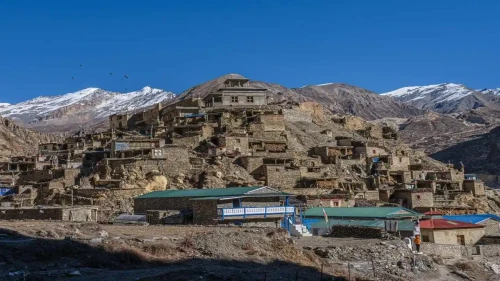
Today’s journey is both challenging and rewarding. We cross several suspension bridges over glacial streams and walk along rugged canyons and high cliffs. As we approach Phu Village, ancient stone structures and chortens (Buddhist shrines) come into view, revealing the area’s rich Tibetan Buddhist heritage. On arrival, we explore the medieval-like village of Phu, built of stacked stone houses, and observe traditional yak herding and carpet weaving. Overnight at a lodge in Phu.
MEALS Breakfast/ Lunch/ Dinner Lodge
To adjust to the high altitude, we take an acclimatization day in Phu. We visit the iconic Tashi Lhakhang Monastery, a revered site said to be blessed by the Dalai Lama. You can also hike to the upper parts of the village for stunning views of Himlung Himal (7,126m). This day allows your body to adapt, reducing the risk of altitude sickness.
MEALS Breakfast/ Lunch/ Dinner Lodge
Leaving Phu, we retrace our steps and descend through rugged trails before taking a different path towards Nar Phedi, where a simple monastery offers basic lodging. The landscape is serene, with towering cliffs and glimpses of snow-capped peaks. We stay at the monastery, enjoying a quiet evening with the resident monks.
MEALS Breakfast/ Lunch/ Dinner Lodge
Today, a short but steep climb leads us to Nar Village, a charming settlement known for its ancient culture and Tibetan-influenced lifestyle. Colorful prayer flags flutter in the wind as we walk through narrow stone-paved alleys. In the afternoon, we explore the village, visit the local chortens, and interact with villagers, who are known for their warm hospitality.
MEALS Breakfast/ Lunch/ Dinner Lodge
This is a challenging yet rewarding day. We start early, ascending through rugged terrain to reach the summit of Kang La Pass (5,322m). From the top, we are rewarded with breathtaking views of the Annapurna Range, Gangapurna, and Tilicho Peak. A steep descent brings us to the picturesque village of Ngawal, where we rejoin the Annapurna Circuit. Overnight at a comfortable tea house in Ngawal.
MEALS Breakfast/ Lunch/ Dinner Lodge
We enjoy a relatively easy walk through pine forests and along the Marsyangdi River to reach the bustling village of Manang, the heart of the Annapurna Circuit. Manang offers modern amenities, including bakeries, coffee shops, and trekking gear stores. In the afternoon, you can visit Gangapurna Lake or explore Praken Gompa, where a local lama offers blessings to trekkers.
MEALS Breakfast/ Lunch/ Dinner Lodge
To prevent altitude sickness, we take another rest day in Manang. You can take a short hike to either the Ice Lake (Kicho Tal) or Chongkor Viewpoint, both offering stunning panoramic views of the Annapurna range. Acclimatization is crucial as we prepare for the high-altitude challenges ahead.
MEALS Breakfast/ Lunch/ Dinner Lodge
We leave Manang and ascend gradually through alpine meadows and juniper forests. The air becomes thinner, and we start to feel the high altitude. Along the way, we pass yak pastures and small stone huts before reaching Yak Kharka, a serene stopover offering stunning sunset views over the surrounding peaks.
MEALS Breakfast/ Lunch/ Dinner Lodge
Today is a short but steep trek as we approach Thorong Phedi, the base of Thorong La Pass, one of the world’s highest trekking passes. The path crosses a suspension bridge and follows a narrow trail prone to landslides, so we trek cautiously. In the afternoon, we rest early to prepare for the long pass crossing tomorrow.
MEALS Breakfast/ Lunch/ Dinner Lodge
We start before sunrise to tackle the long climb to Thorong La Pass (5,416m), the highest point of the trek. The ascent is tough due to the altitude and cold, but the panoramic views from the top are unforgettable. After celebrating our achievement, we begin a long descent to Muktinath, a sacred pilgrimage site for Hindus and Buddhists. Here, we visit the revered Muktinath Temple, known for its eternal flame and 108 water spouts.
MEALS Breakfast/ Lunch/ Dinner Lodge
The trail descends through the arid landscape of Lower Mustang, following the Kali Gandaki River, known for its Shaligram fossils. We pass through Kagbeni, an ancient trading village with a medieval charm. Finally, we reach Jomsom, a windy town famous for its apple orchards and apple brandy. Overnight stay at a lodge in Jomsom.
MEALS Breakfast/ Lunch/ Dinner Lodge
We take a short, scenic flight from Jomsom to Pokhara, flying between the Dhaulagiri and Annapurna massifs. Upon arrival in Pokhara, you can relax by Phewa Lake, visit Devi’s Falls, or explore the Peace Pagoda.
Overnight at a hotel in Pokhara.
MEALS Breakfast/ Lunch/ Dinner Hotel
Today, we either drive (6–7 hours) or take a short flight (25 minutes) back to Kathmandu. Upon arrival, you can explore more of the capital city or rest at your hotel. In the evening, Trip Pokhara will host a farewell dinner with cultural performances.
MEALS Breakfast/ Lunch/ Dinner Hotel
This day is reserved for relaxation or optional sightseeing. You can visit world heritage sites like Pashupatinath Temple, Boudhanath Stupa, and Swayambhunath (Monkey Temple). It’s also a great time to shop for souvenirs in Thamel.
MEALS Breakfast & DinnerAfter breakfast, our team will transfer you to Tribhuvan International Airport for your flight home. As your Nar Phu Valley and Annapurna Circuit trek concludes, you’ll leave with incredible memories and stories to cherish forever.
MEALS Breakfast
The journey to Narphu Valley Trek begins in Kathmandu, Nepal's vibrant capital. From Tribhuvan International Airport, your Trek operator arranges airport transfers to your hotel in Thamel. On Day 2, you'll embark on a scenic 10-hour drive from Kathmandu to Koto (2,600m), the official trekking starting point for the Nar Phu Valley trek route.
Koto is the entry point of the Narphu Valley Trek, where the drive covers approximately 150 kilometers via the Prithvi Highway, following the Trishuli River through lush terraced hillsides. You'll pass through Besisahar, the traditional gateway to the Annapurna Circuit, before transitioning to a rough jeep track. This final stretch to Koto takes you through scenic valleys and alongside the Marsyangdi River, where cascading waterfalls frame the landscape. Trip Pokhara provides comfortable vehicles with experienced drivers familiar with mountain roads. The journey is long but essential, immersing you in Nepal's natural beauty before you officially step onto the Nar Phu Valley trek route.
The Nar Phu Valley trek route is classified as Moderate to Challenging, requiring good physical fitness and prior trekking experience for the Nar Phu Valley trek route. Daily trekking distances on the Nar Phu Valley trek route range from 4 to 8 hours, with significant altitude gain on pass-crossing days of the Nar Phu Valley trek route. The combination of high altitude, extended daily exertion, and remote terrain on the Nar Phu Valley trek route demands systematic preparation through cardio training, strength exercises, and mental conditioning for the Nar Phu Valley trek route.
The standard package for the Narphu Valley trek ranges from $1000 to $1800 for 12-15 days, and the price goes higher with the increase in the number of days. Understanding the financial aspects of the Nar Phu Valley trek with the Annapurna Circuit is essential for planning your Himalayan adventure. The 18-day trek offers excellent value, combining remote trekking with professional services and authentic cultural experiences.
Nar Phu Valley trek cost package covers airport transfers, Kathmandu-to-Koto and Jomsom-to-Pokhara transportation, domestic flights, all trekking permits (ACAP, TIMS, and Restricted Area Permits), experienced guides and porters, tea house accommodation, all meals, comprehensive first-aid kits, and emergency satellite phones. This transparency eliminates hidden charges, making budgeting straightforward.
Pre-Trek Training Tips:
With rhododendrons blooming along the trail, spring offers vibrant landscapes for those who have an interest in photography and love colors. Spring also comes with stable weather and crisp wind, offering a comfortable environment to walk in the terrain. The temperature is usually around 10°C to 20 °C in lower altitudes and colder in higher passes. The lush landscapes, vibrant wildflowers, great mountain visibility, and fewer risks of snowfall on passes make it one of the most suitable times for the trek.
Autumn offers ideal trekking conditions with stable weather and excellent visibility. The festive season in Nepal (Dashain & Tihar festivals) falls during this time, making it the best time to indulge in the festive vibe of the country. The temperature during this time is 5°C to 18°C, depending on altitude, crisp air, and clear skies. It is the peak trekking season with panoramic views of Annapurna, Gangapurna, and Tilicho Peak, and the best conditions for crossing Kang La Pass (5,322m) and Thorong La Pass (5,416m).
Winter smells of snow and extreme weather. It is one of the seasons to avoid, as snow can block passes with extreme cold and snow at high passes. During this time, the days are shorter and the nights are extremely cold. The temperature goes from -5°C to 10°C in the lower regions and from -15°C to -25°C in higher altitudes like Kang La and Thorong La. The winter trek is suitable for experienced trekkers and those who can adapt to extreme weather conditions.
Monsoon is not recommended because of daily rain showers, fog, leeches, and high humidity that make the trek uncomfortable. The trail is slippery and muddy with a risk of landslides and floods in the lower altitudes. The visibility is also poor, blocking the mountain for days. However, the Nar and Phu valleys lie in the Trans-Himalayan rain shadow, receiving less rainfall than the southern Annapurna region, but you have to walk through wet regions to reach the valley. Also, the temperature in the lower altitudes is 15 °C to 25 °C and 5 °C to 15 °C in higher altitudes, with chilly nights.
Expert Tip: For the clearest skies and safest trail conditions, October and April are often considered the absolute best months.
Difficulty Level: Moderate to Challenging
Fitness Requirements:
The Narphu Valley with Annapurna Circuit Trek takes you through one of the most diverse ecological zones. From sub-tropical forests to alpine deserts, this route offers a rich variety of Himalayan flora and fauna, many of which are rare or endangered. This area is a part of Annapurna Conservation Area (ACA), Nepal's largest protected region.
The Nar Phu Valley is home to the plant life of the Himalayas, despite its high altitude and harsh climate. The biodiversity in this region is a symbol of resilience, as it thrives even at elevations above 4000 metres. Spring comes with blooming forests of rhododendron and wildflowers along the trail. Other evergreen plants, such as juniper shrubs, Himalayan herbs, mosses, and lichens, used for local rituals and medicinal purposes, are also available in these trails. This rare plant diversity is part of what makes Nar Phu Valley not only culturally rich but also ecologically significant within the Annapurna Conservation Area.
The Nar Phu Valley Trek will feel like entering a forgotten corner of the world. The silent plateaus, the distant cry of a mountain bird feels heavenly in this untouched Himalayan Wilderness, where the wildlife thrives quietly, far from the chaos of modern life.
As you walk this land, you might catch a glimpse of a blue sheep(Bharal), which is not blue, blending perfectly into the landscape. The majestic Himalayan griffon vultures and lammergiers scan the terrain from above the sky. If you get lucky, you may spot the ghost of the mountains, the elusive snow leopard protected in this region. The lower valleys consist of glimpses like the musk deer moving through underbrush and the Himalayan Monal soaking up the sun, highlighting its iridescent feathers.
As you move ahead, you may see Himalayan marmots popping their heads from the burrows. The landscape is so amazing that the Nar Phu Wilderness is more than a backdrop, but the symbol of altitudes that are alive. The wildlife of this region is protected by the Annapurna Conservation Area.
Do you think trekking is just walking? If yes, then you are wrong. Trekking through the Nar Phu Valley combined with the Annapurna Circuit is not just a journey through centuries of Tibetan-influence heritage, ancient trade routes, and spiritual tradition reflecting Hinduism and Buddhism.
The Nar and Phu village in the remote part of the Annapurna region, inhabited by ethnic Tibetan Buddhists for centuries, has preserved its language, architecture, and rituals. The stone-walled houses, mani walls, and monasteries(gompas) are examples of heritages speaking of the spiritual legacy passed down through many generations.
People of this region indulge themselves in yak herding, barley farming, and conducting Buddhist ceremonies. This trek offers you a glimpse of authentic Himalayan Culture. The fluttering prayer flags along the way, mani walls are the quiet infusion of Buddhist spirituality.
As the Nar Phu route reconnects the classic Annapurna Circuit near Manang, you will also encounter Gurung and Thakali communities, while the mountain traditions still exist. This trip is a rare chance to walk through history and meet people living ancient traditions.
The Nar Phu Valley and Annapurna Circuit Trek goes through several high mountain passes and reaches altitudes above 5400m. Having awareness about altitude and safety preparation becomes a crucial part of the journey.
Here’s what you should know to stay healthy, safe, and moving during the trek:
The Nar Phu Valley and Annapurna Circuit Trek offers a rare Himalayan experience from the untouched valleys of Nar and Phu to the iconic Thorong La Pass, and everything will feel magical. With the challenge of trekking and the beauty of remote villages, it comes with both physical fulfillment and emotional reward. With Trip Pokhara’s expert guidance, you’ll not only trek safely but also gain meaningful insight into the landscapes and lives that make this region so extraordinary.
Are you ready to let the mountains change you?
Moderate to challenging due to high altitude and long trekking hours. Prior trekking experience is recommended.
Yes, as Nar Phu Valley is a restricted area, trekking with a registered guide from Trip Pokhara is mandatory.
ACAP, TIMS, and Nar Phu Restricted Area permits are required. Trip Pokhara arranges all permits.
Limited Wi-Fi is available in villages like Manang and Muktinath. Mobile connectivity is patchy.
Beginners with good fitness can complete it, but some prior high-altitude experience is helpful.
The highest point in the Nar Phu Valley Circuit Trek is Thorong La Pass (5,416m).
Spring (March–May) and autumn (September–November) are the best seasons to trek in Nar Phu Valley.
Tea houses offer dal bhat (rice and lentils), soups, momos, noodles, and pancakes during the trek. If you have any allergies , then inform to the trekking agency in advance.
Yes. Proper acclimatization, drinking plenty of water, and trekking gradually help prevent altitude sickness.
Trip Pokhara offers group treks with sizes between 2 to 15 trekkers or more. Private treks are also available.
The best time to trek the Annapurna Circuit is during the pre-monsoon spring (March to May) and post-monsoon autumn (September to November) seasons. These periods offer ideal weather, clear mountain views, and safer trail conditions.
Yes, you can make the Nar Phu Valley Trek longer by going to Tilicho Lake and crossing Thorong La Pass. This route takes you through quiet valleys, a high mountain lake, and one of the highest trekking passes in the world. It’s a tough hike, but the views and experience are worth it.
Yes, beginners can trek to Nar Phu Valley. The hike is not easy, but if you are fairly fit and don’t give up easily, you can do it. Just make sure to get your body and mind ready before the trip.
Nar Phu Valley is designated a restricted area in Nepal to protect its fragile Trans-Himalayan ecosystem, preserve endangered wildlife like snow leopards, and safeguard ancient Tibetan Buddhist communities. Limited access prevents environmental degradation and preserves cultural authenticity. Only licensed trekkers with permits can enter restricted areas in Nepal, ensuring sustainable tourism practices.
The 18-day Nar Phu Valley trek cost with Trip Pokhara includes accommodation, meals, guides, porters, permits, and transportation, which typically ranges from USD 1,000–1,800 depending on group size and season. Additional Nar Phu Valley trek cost expenses include international flights, travel insurance, personal items, and guide/porter tips. Budget USD 200–400 extra for these additions. Early bookings during shoulder seasons (April/October) may offer Nar Phu Valley trek cost discounts.
Nar Phu Valley weather varies dramatically by season. October and April offer ideal conditions with temperatures of 5°C–20°C and clear skies. Spring (March–May) brings 10°C–20°C temperatures and blooming rhododendrons. Autumn (September–November) offers stable weather and a festival atmosphere. Winter brings harsh conditions (-15°C to -25°C at passes) with heavy snow blocking trails. Monsoon (June–August) causes daily rain and poor visibility, making it unsuitable for the Nar Phu Valley trek route.
Trip Pokhara handles all permit arrangements for restricted areas in Nepal, eliminating bureaucratic hassles. Restricted areas in Nepal permit applications require passport copies and passport-sized photos. Permits for restricted areas in Nepal are arranged before departure, allowing seamless trekking through restricted areas in Nepal. The company maintains updated knowledge of permit regulations and restricted areas in Nepal, and policies for all restricted areas in Nepal regions.
Find Out Our Similar Trips

© 2011 - 2026 All rights reserved. Trip Pokhara Pvt Ltd Developed By : Xenatech Nepal




 Nepal
, Nepal
Nepal
, Nepal 


Michele, NepalOn 2025-07-01
Highly Recommended
Amazing Nar Phu Valley with Annapurna Circuit Trek – October 2024 with Family. We had the adventure of a lifetime trekking the Nar Phu Valley combined with the Annapurna Circuit in October 2024—and it was even more special because we did it as a family! The raw beauty of the remote Nar and Phu villages, ancient Tibetan culture, dramatic mountain landscapes, and the thrill of crossing Thorong La Pass created memories we’ll never forget. A huge thank you to Trip Pokhara for organizing everything perfectly. From permits to accommodations, guide support to route planning, every detail was handled with care and professionalism. Our guide was experienced, kind, and made sure we stayed safe and comfortable throughout the journey. This trek was a perfect blend of off-the-beaten-path adventure and classic Himalayan trekking. We highly recommend Trip Pokhara to anyone looking for a genuine, well-managed trekking experience in Nepal. Fully recommended